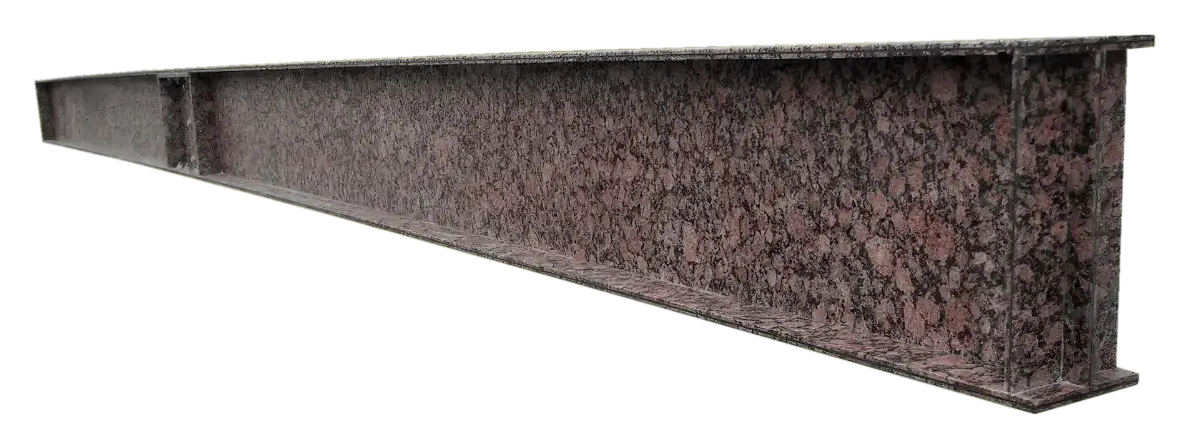
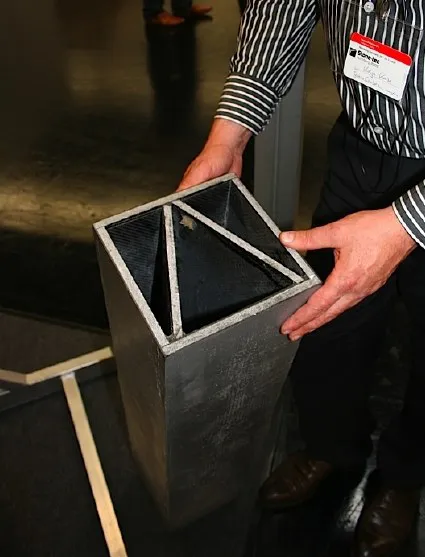
Steel is often used in the form of structural beams. The CFS® structure shown here is such a beam but... is made of stone and carbon fibre.
The new, high performance composite, known as CarbonFibreStone (CFS), consists of a slice of granite with a fine laminate of carbon fibre on one or both sides. “– A bit like a stone-and-carbon-fibre sandwich,” explains Kolja Kuse, CFS’s creator. The resulting material is not only elastic, but is as strong as construction steel, as light as aluminium and has better vibration-damping properties than any other known pressure-resistant material.
The damping properties of CFS® could potentially provide a decisive advantage over metals in most applications.
CFS® Sheets
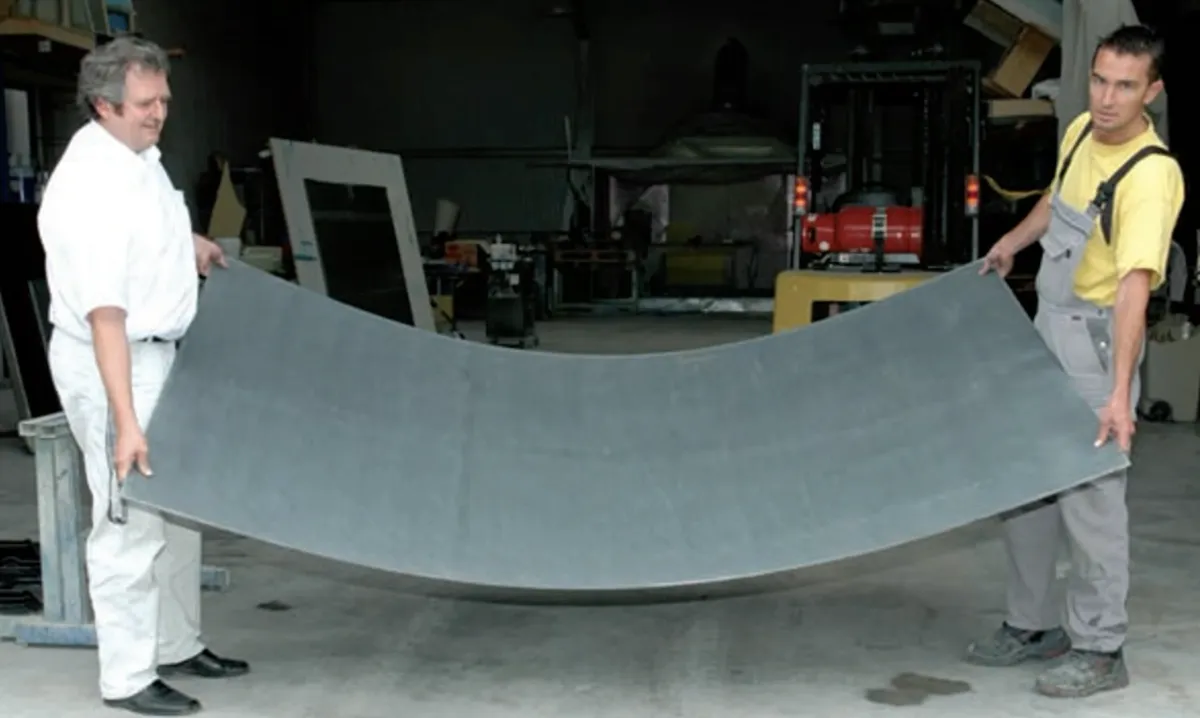
This CFS sheet measuring 3.20m x 1.80m, up to 1.6mm thin, weighs less than an aluminium sheet of the same thickness.
The sheet can be bent in any direction and always returns to its slightly curved original shape. The shape is virtually frozen thanks to the pre-set tension.
3mm Carbon Fiber Stone sheet (CFS) - stone becomes bendable
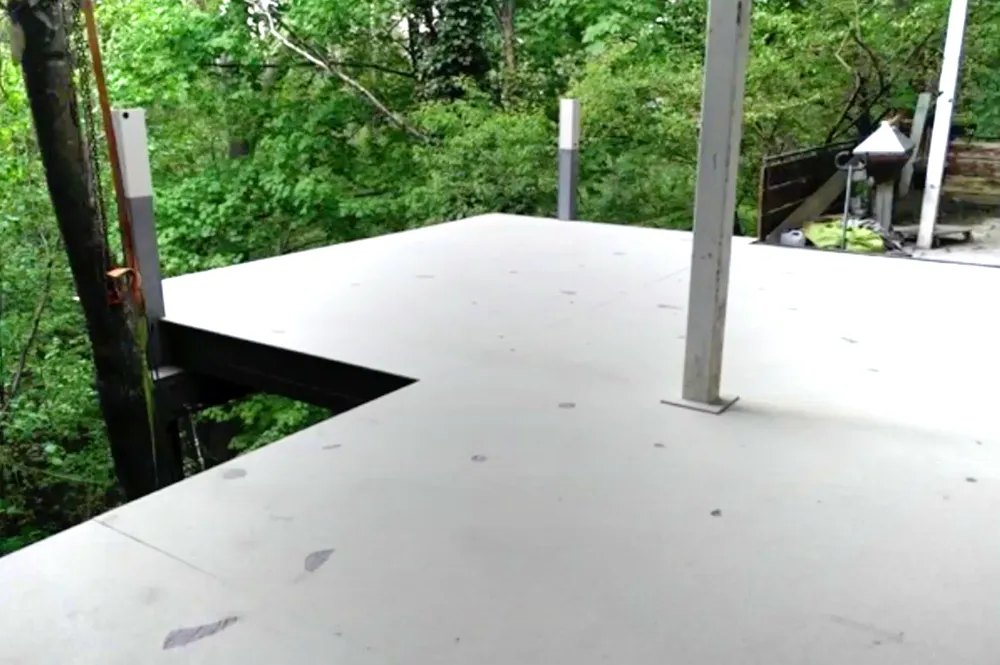
Large stone plates using limestone and no cement
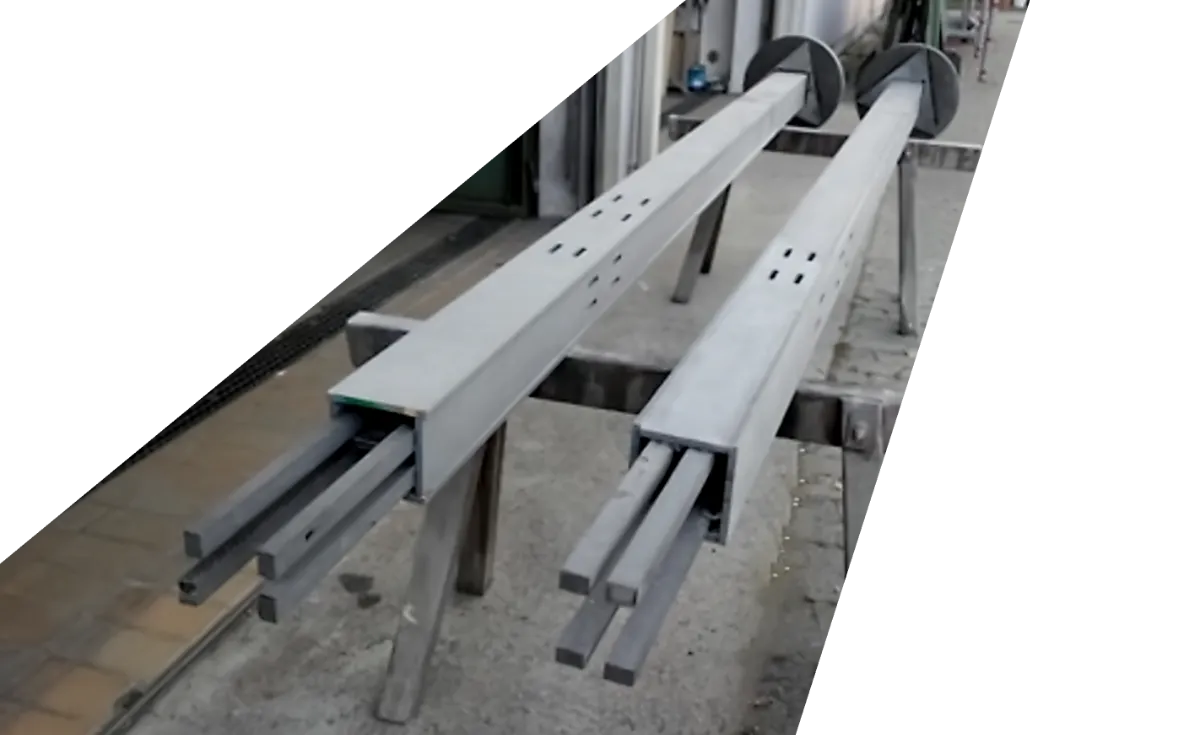
Pillars and Beams
Pillar
It is true that, by volume, CFS would consume as much energy to produce as aluminium, but it has ten times more tensile strength. So even with a 5:1 ratio of stone to carbon fibre for high load bearing cases, the production energy would decrease by something approaching a factor of four in comparison to aluminium.
Load-bearing walls
TechnoCarbon Technologies used the material to develop composite ‘sandwich’ walls. A 2.70m high CFS-element – the height of a normal room wall and 1m wide has been tested in co-operation with the Chur Technical and Business University in Switzerland to withstand a 20t load – the mass of 3 floors.
The unique property of these building elements is that the stone element is not merely mounted on a concrete wall but rather functions as a load-bearing-element. There are unexpected advantages compared to concrete: one such advantage is in the mass of the material, weighing 4 times less than concrete. This makes transportation to site less costly.